September 3, 2026
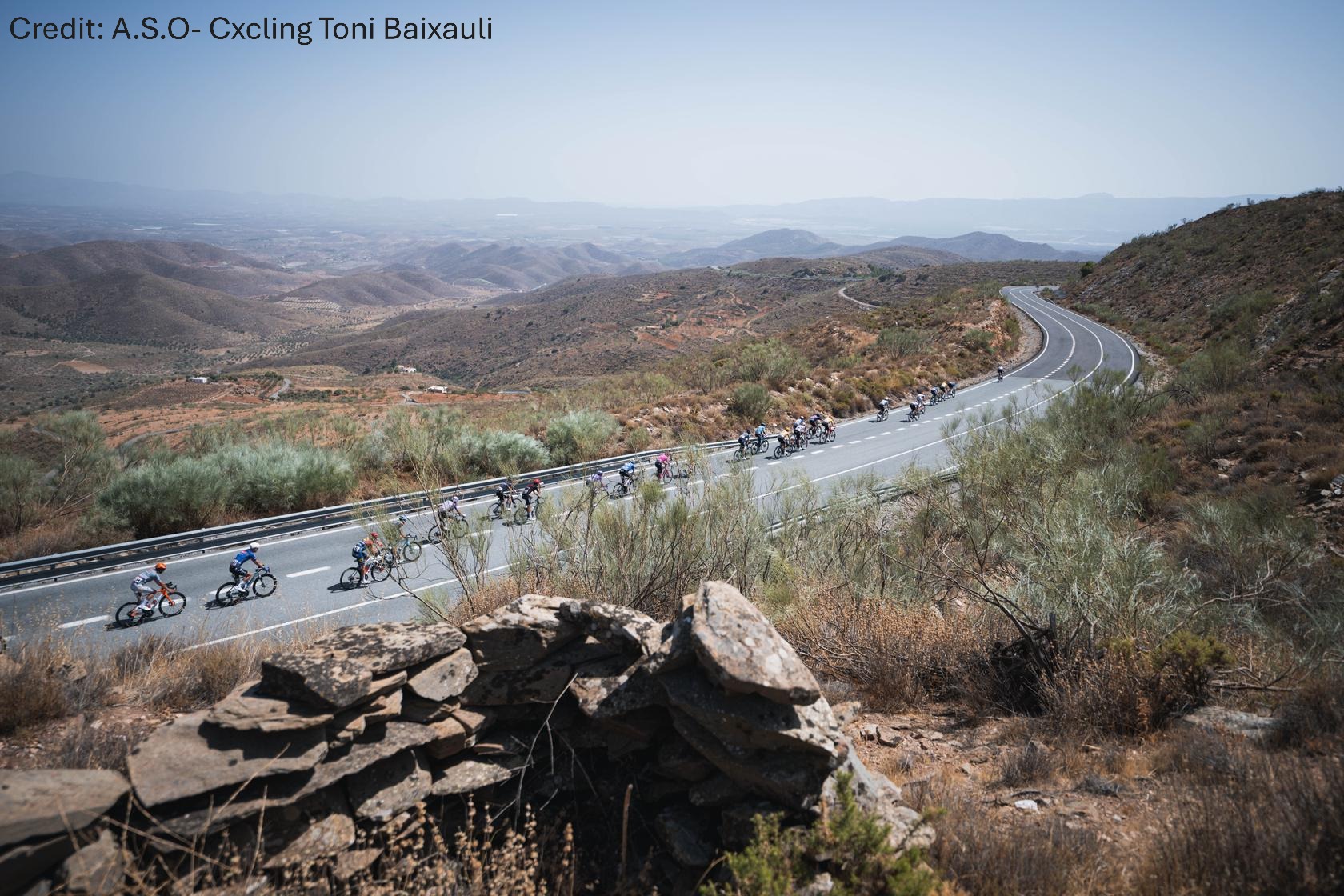
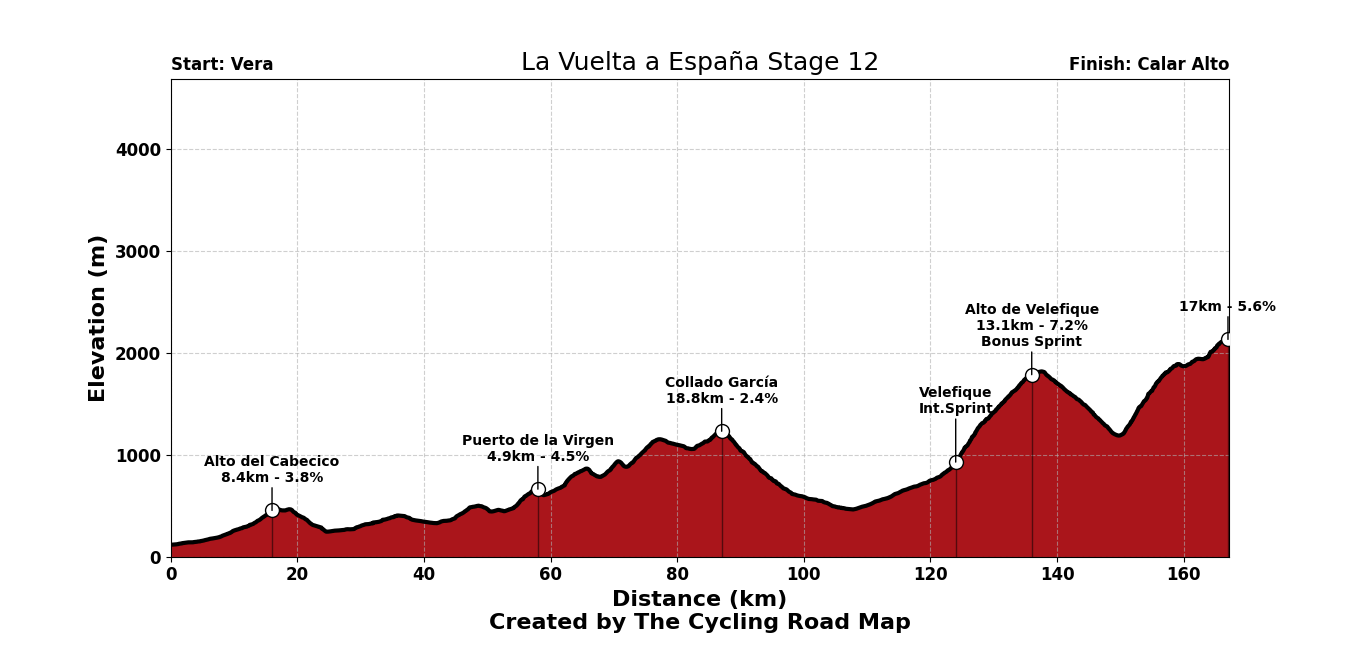
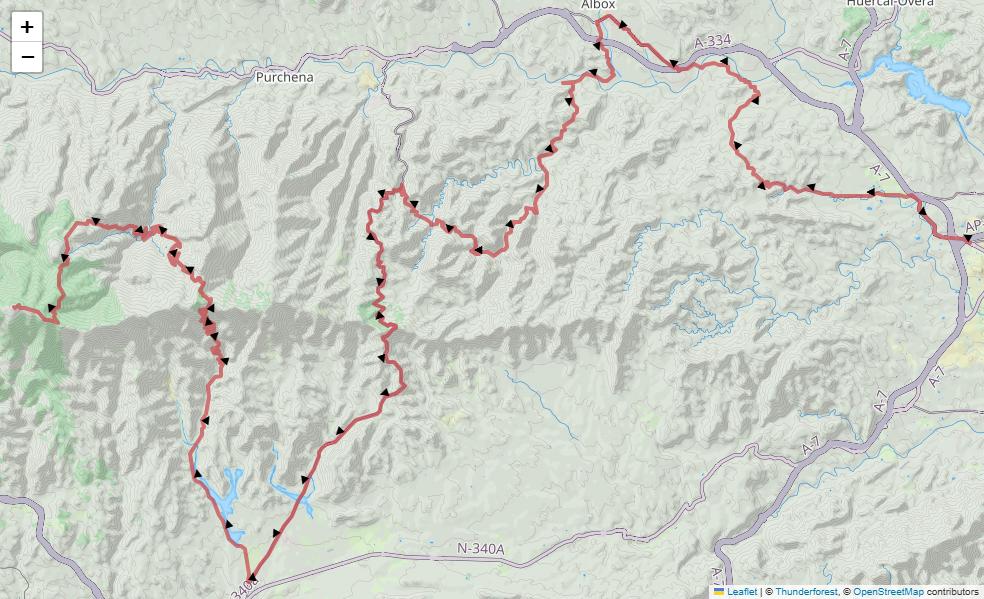
La Vuelta continues its march South with the start of the twelfth stage in Vera. It's a difficult day that gets progressively harder as the race moves away from the coast and into the mountains of the Sierra de los Filabres. There are three categorized climbs in the first 90 km but none of them are hard, just long slogs at 4-5% that bring the race from zero to 1,200 meters above sea level. A long descent towards Tabernas will bring the riders into a vast basin and the Tabernas Desert, the only true desert in Europe. A long false flat uphill goes from 60 km to 43 km to go to the Intermediate Sprint in Velefique and the base of the Alto de Velefique. The Bonus Sprint is situated at the top of the 13 km, 7.2% Alto de Velefique where the riders will still have 31 km to go. A technical 14 km descent to Bacares brings the race to the base of the final climb and the finish on the Calar Alto. The full climb is 17 km at 5.6% but the first 6.5 km average 9% and will be the place that the light climbers will want to make their move. The stage is 166 km long and over such hard terrain, it may be too much to ask for a GC team to keep control all day which leaves a break with a good shot at contesting the victory.
Race Summary
The start was cagey as everyone seemed to be waiting for the first climb of the Alto del Cabecico after just 8 km. It wasn't until 153 km to go that a few riders got a gap but the peloton was still bubbling away with a steeper gradients still to come. By the top, it was still together as Wout van Aert of Visma-Lease a Bike led the bunch ahead of Santiago Buitrago of Bahrain Victorious, an interesting development after van Aert pipped Buitrago on a KOM yesterday as well.
The descent was more of a false flat downhill but it was quick and a gap formed with Axel Laurance of Netcompany-Ineos, Alexey Lutsenko of NSN Cycling, and Ramses Debruyne of Alpecin-Premier Tech getting away. The field stalled for a few moments when the road flattened but kicked off once again as Bahrain Victorious tried to fire Buitrago into the break. Groups continued to go off the front and come back, keeping the peloton within 15 seconds of the leading trio. At 131 km to go, the White Jersey and fourth overall, Oscar Onley of Netcompany-Ineos, came down through a roundabout along with two other riders. Onley looked more annoyed than hurt and was quickly given a new bike and got on his way.
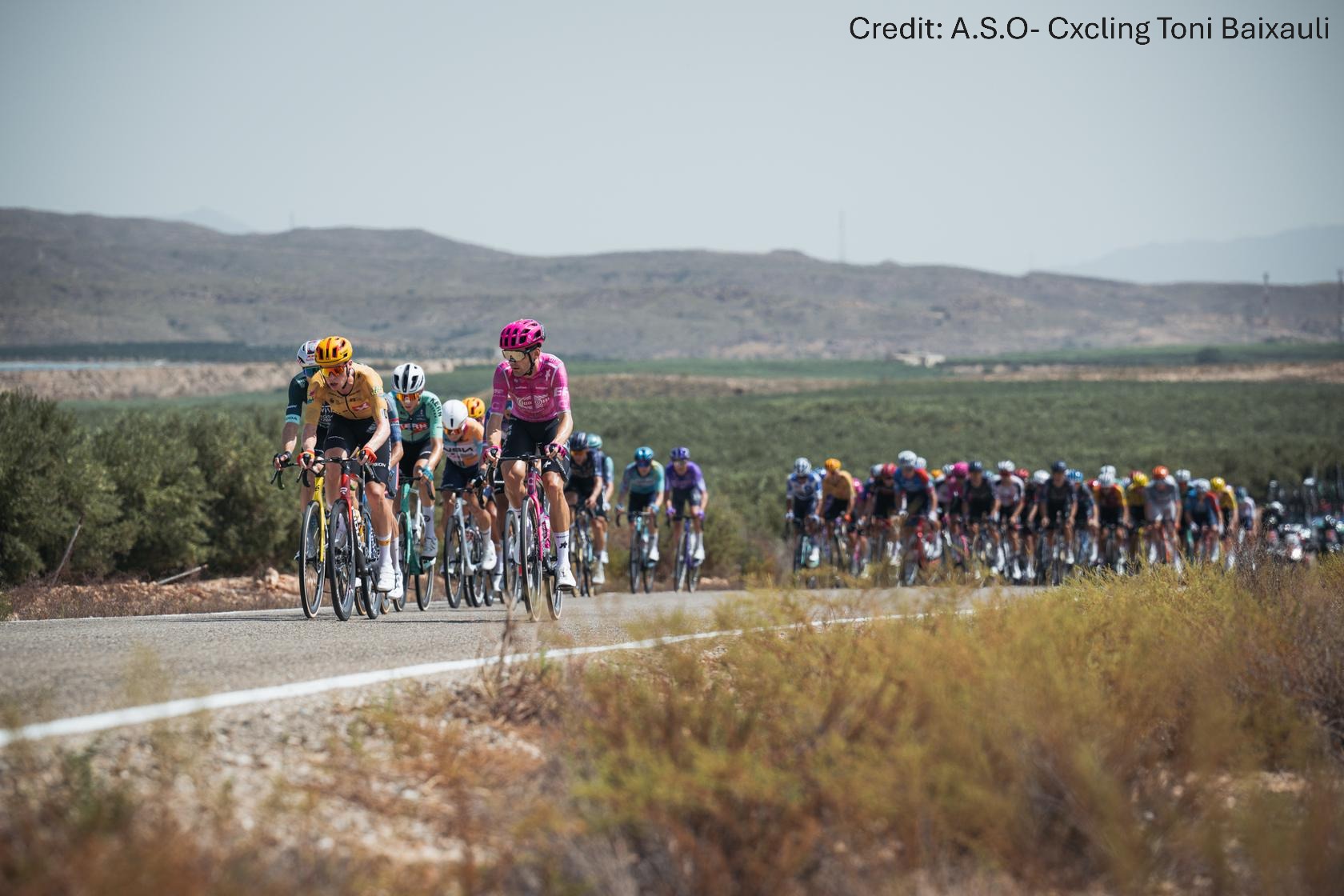
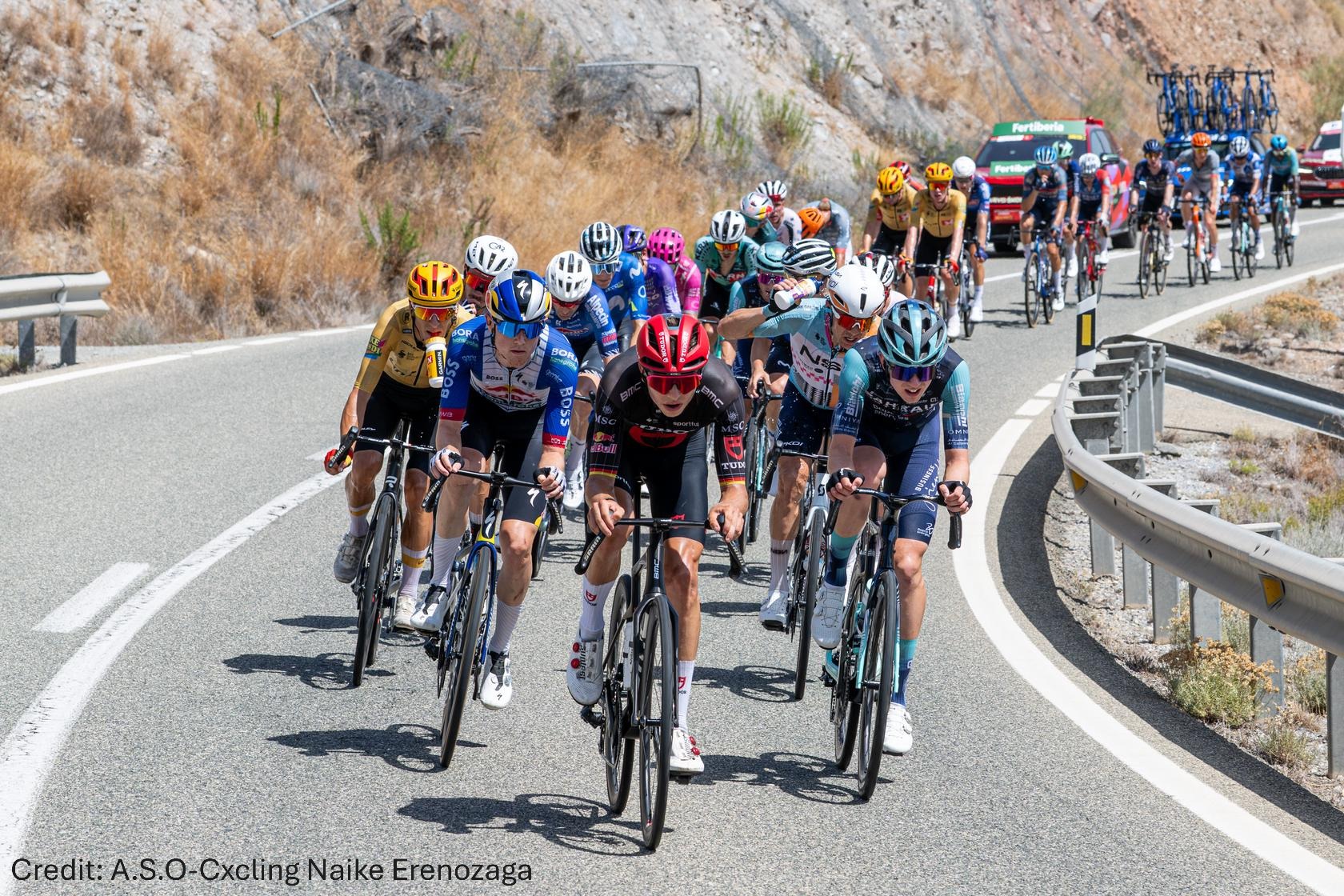
Due to the crash, a split formed near the front of the peloton and around 25 riders went clear. They were quickly across to Laurance, Lutsenko, and Debruyne but more riders were trying to make the bridge out of the bunch. Two or three more riders escaped before the peloton shut down wide across the road with 124 km to go which allowed the leaders to start building their advantage. In the end, 27 riders made the break with Buitrago and three of his teammates including best placed on GC, Jakob Omrzel, at 8 minutes 5 seconds. Movistar reluctantly started to ride with 116 km to go when the gap reached 3 minutes which increased to 4 minutes 30 seconds as van Aert led over the top of the Puerto de la Virgen 9 km later.
The peloton descended passed an ancient marble quarry and into groves of olive trees in Cóbdar and was right onto the irregular climb of the Collado García. The race made its way up the hot, exposed climb with short downhill respites along the way. As the riders continued climbing, there were expansive views back down the valley but it was partially obstructed due to the hazy conditions from the scorching temperatures. Distance between the break and the peloton grew out to over 6 minutes when the fight for the KOM points kicked off. Buitrago tried to catch van Aert out by going early but the Belgian was attentive and straight on the wheel. Van Aert took a moment to catch his breath when he got in the slip stream then powered forward to decisively take maximum points at the top ahead of Buitrago.
The race stormed down the high way descent at speeds pushing 100 km/hr into the Tabernas Desert. The gap ballooned out to 6 minutes 50 seconds which vaulted Omrzel onto the virtual GC podium, just over 1 minute down on Mas's lead. No signs of panic were apparent with Movistar, Redbull-Bora Hansgrohe, or Netcompany-Ineos as the Spanish squad just tapped through on the front.
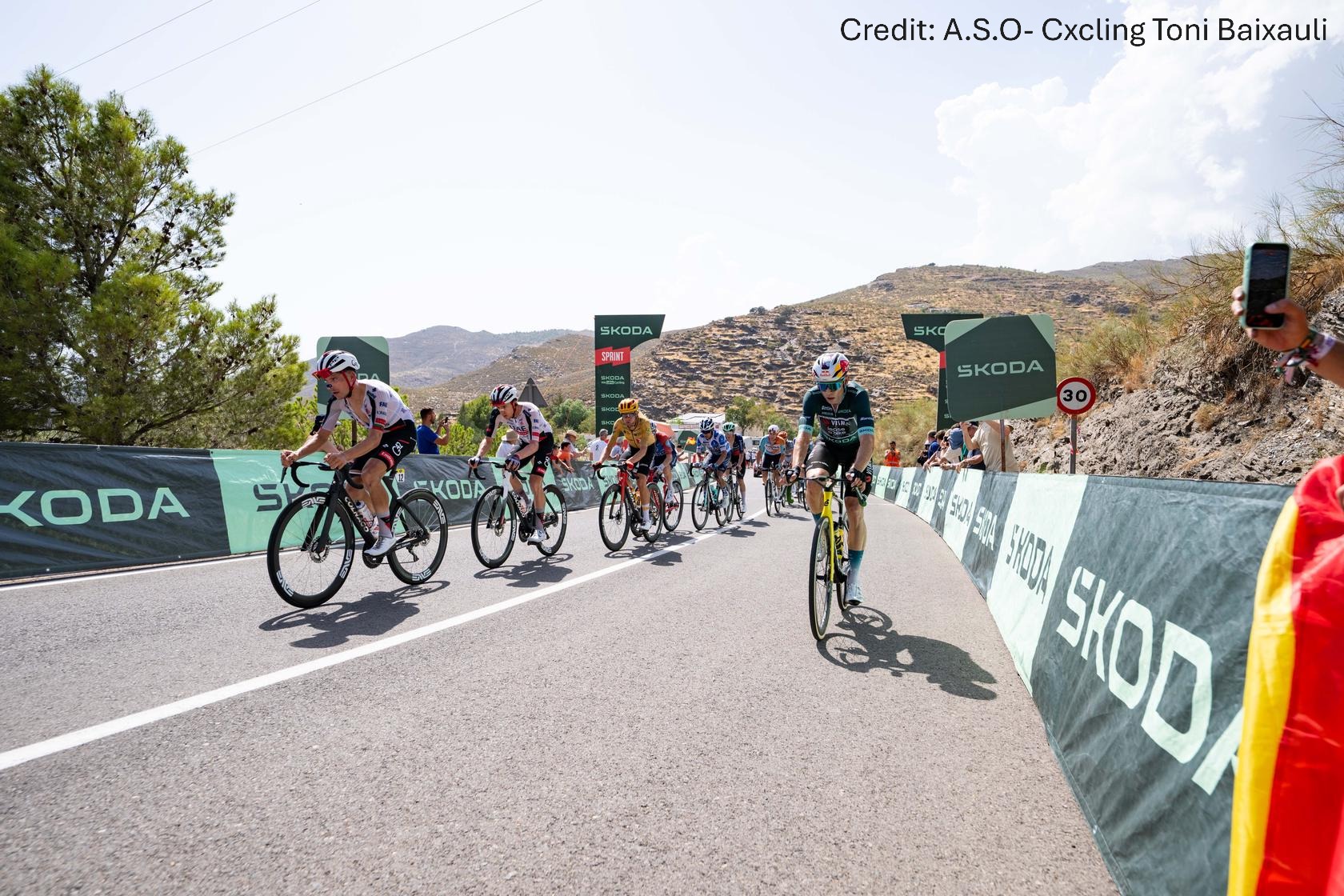
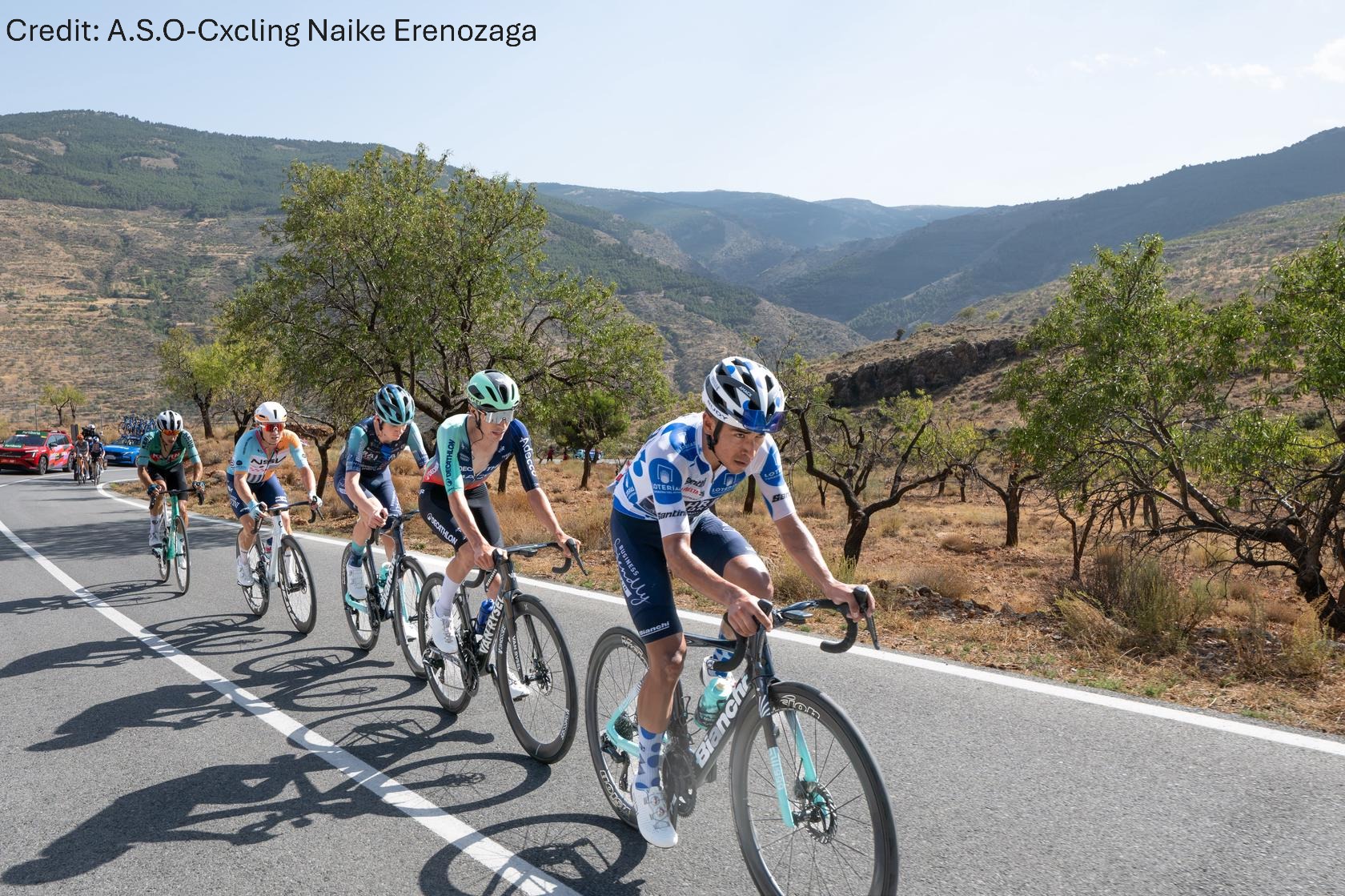
An imperceptible rise in the road began with 60 km to go as the race carried on towards Velefique and the intermediate sprint. At 49 km to go, the front group started playing games for the first time with a number of passengers including two Movistar riders that were sitting at the back. The group was still together at the start of the Alto de Velefique with 44 km to go with a gap of 7 minutes 30 seconds. On the lower slopes, UAE-XRG set a hard pace with João Almeida for Kevin Vermaerke but van Aert was strong enough to hold on and took the Intermediate Sprint that was situated 11.5 km from the top before sitting up and dropping out of the break.
Almeida went back to the front and rode until 8.5 km from the summit and had the group down to 18 riders. When Almeida swung off, Pello Bilbao took over for Bahrain Victorious and upped the pace but the group was still 14 riders at 5 km to the top. Meanwhile in the peloton, Movistar increased the pace, bringing the gap down to 6 minutes 25 seconds but it was not quick enough for some. Richard Carapaz of EF-Education EasyPost shot out of the bunch like a rocket and there was no immediate reaction from the others. Iván Romeo and Movistar were ice cold however, first pegging Carapaz at 20 seconds then slowly reeling the Ecuadorian in around 3 km later.
Back up front, when Bilbao made his last effort and swung off with 35 km to go, Omrzel accelerated and only Léo Bisiaux of Decathlon CMA CGM could follow. A chase group formed with Buitrago, Lutsenko, Luke Tuckwell of Redbull-Bora Hansgrohe, Mauri Vansevenant of Soudal Quickstep, Urko Berrade of Equipo Kern Pharma, Raúl García Pierna of Movistar, and Jack Haig of Netcompany-Ineos. When Omrzel and Bisiaux got within 1 km from the top, they were caught by the chasers and were immediately attacked by Berrade who was charging towards the summit with the others swinging on his wheel. Buitrago came around and comfortably took maximum points and the group went over the top with 5 minutes 30 seconds on a significantly reduced peloton of less than 20 riders.
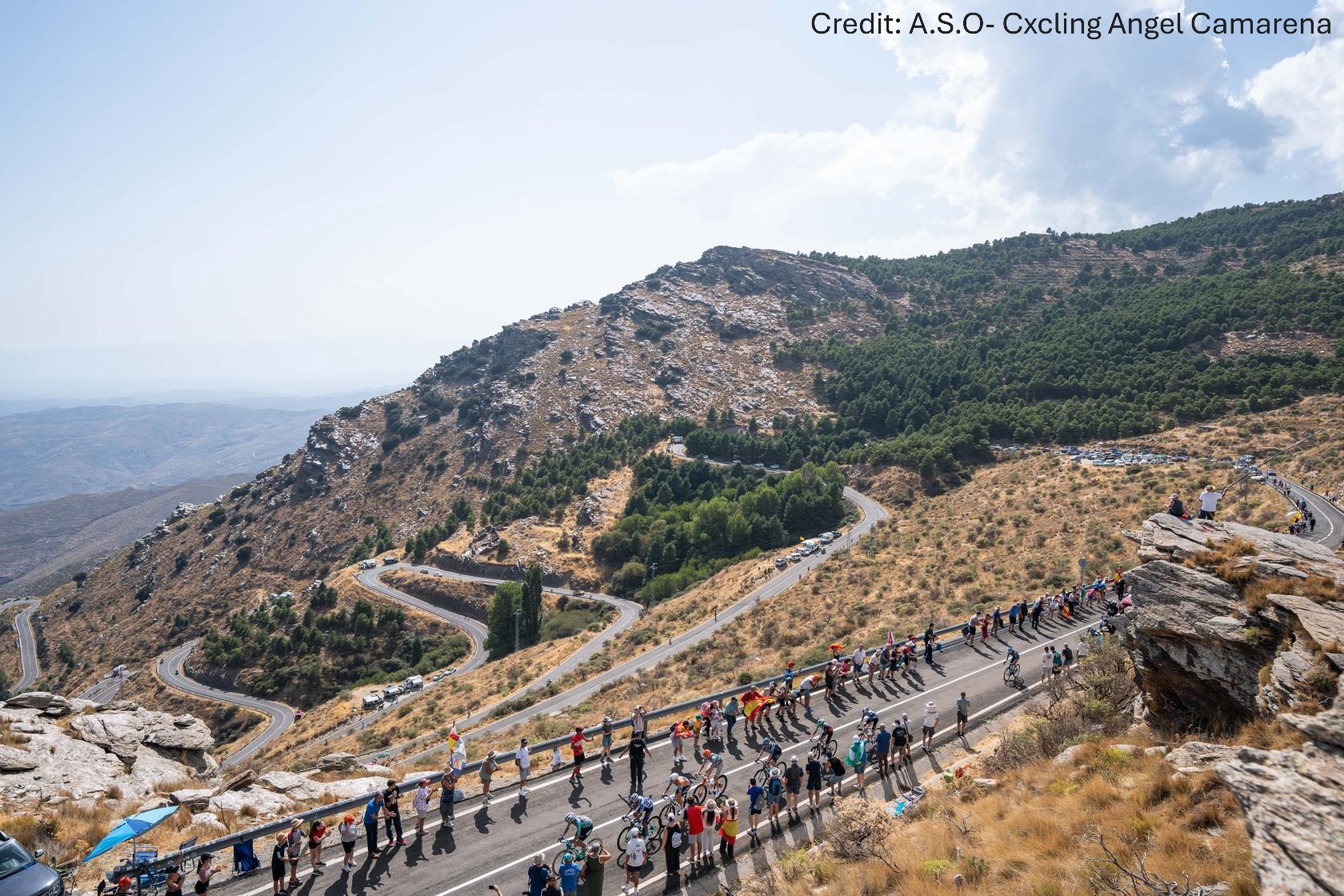
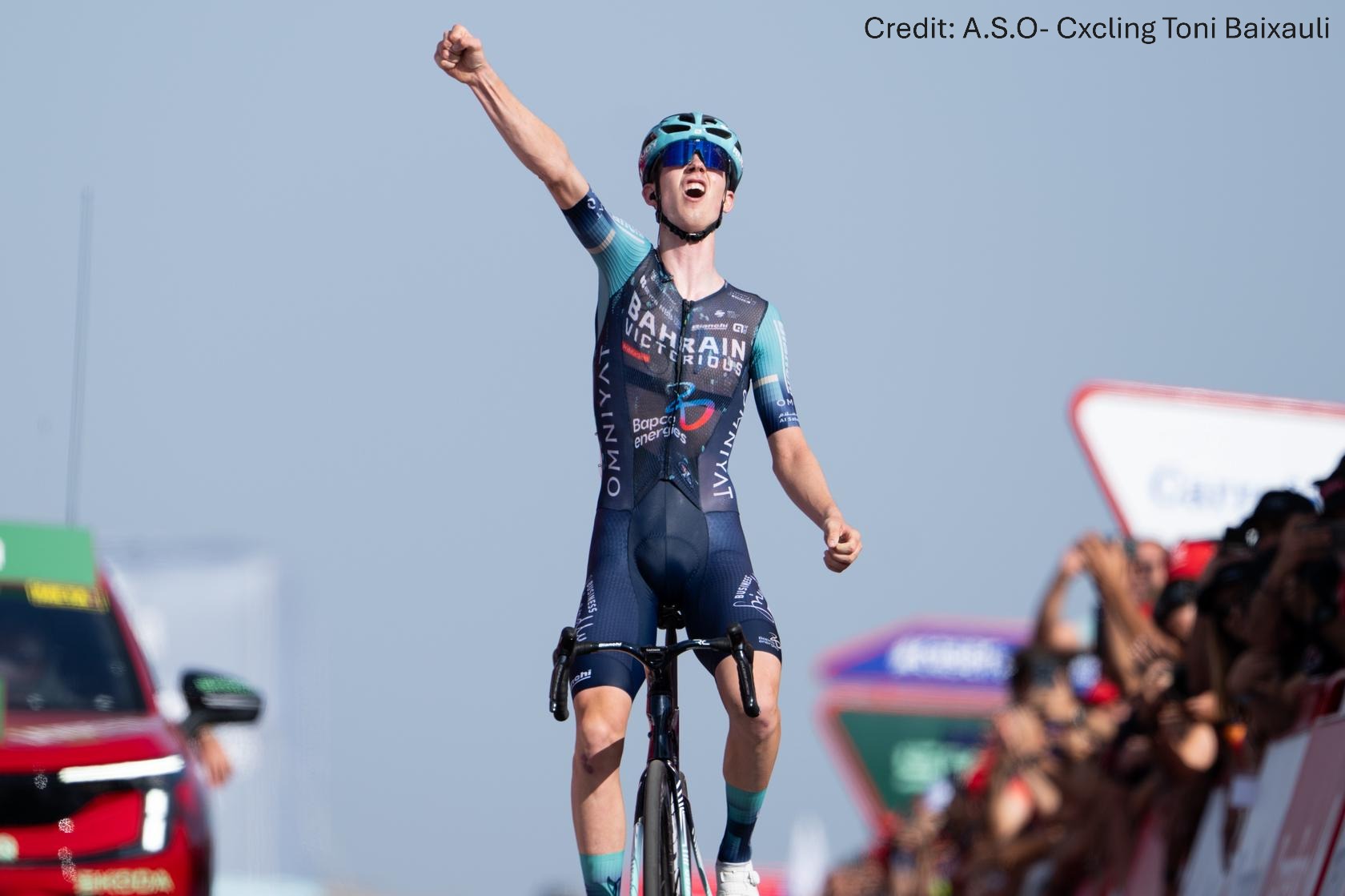
A technical descent brought the race down through the rocky outcroppings of the higher peaks and through Andalusian pine forests into a deep ravine and the town of Bacares. The leading group of nine started the 17 km Calar Alto with 5 minutes 20 seconds and García Pierna was dropped straight away under the pressure put on by Buitrago. The group slowly whittled down to just Buitrago, Omrzel, Bisiaux, and Berrade but with 12.7 km to go, Omrzel went clear with Berrade. Berrade refused to pull with Omrzel and it looked like bluffing but 1 km later, Omrzel dropped the Spaniard and was away. The young Slovenian stayed in his rhythm and carried his momentum into 3 km to go with a nice lead over the GC group of 3 minutes 30 seconds which seemed safe but he could not let up. He got up and over the last steep section between 2 and 1 km to go and as he entered the barriers, there was no one within minutes. Omrzel crossed the line with pure jubilation for his first Grand Tour stage win to became the youngest stage winner in over 40 years at La Vuelta at just 20 years old. Berrade managed to hold off Buitrago to come in for second place nearly 2 minutes after Omrzel with the Colombian around 10 seconds behind for third.
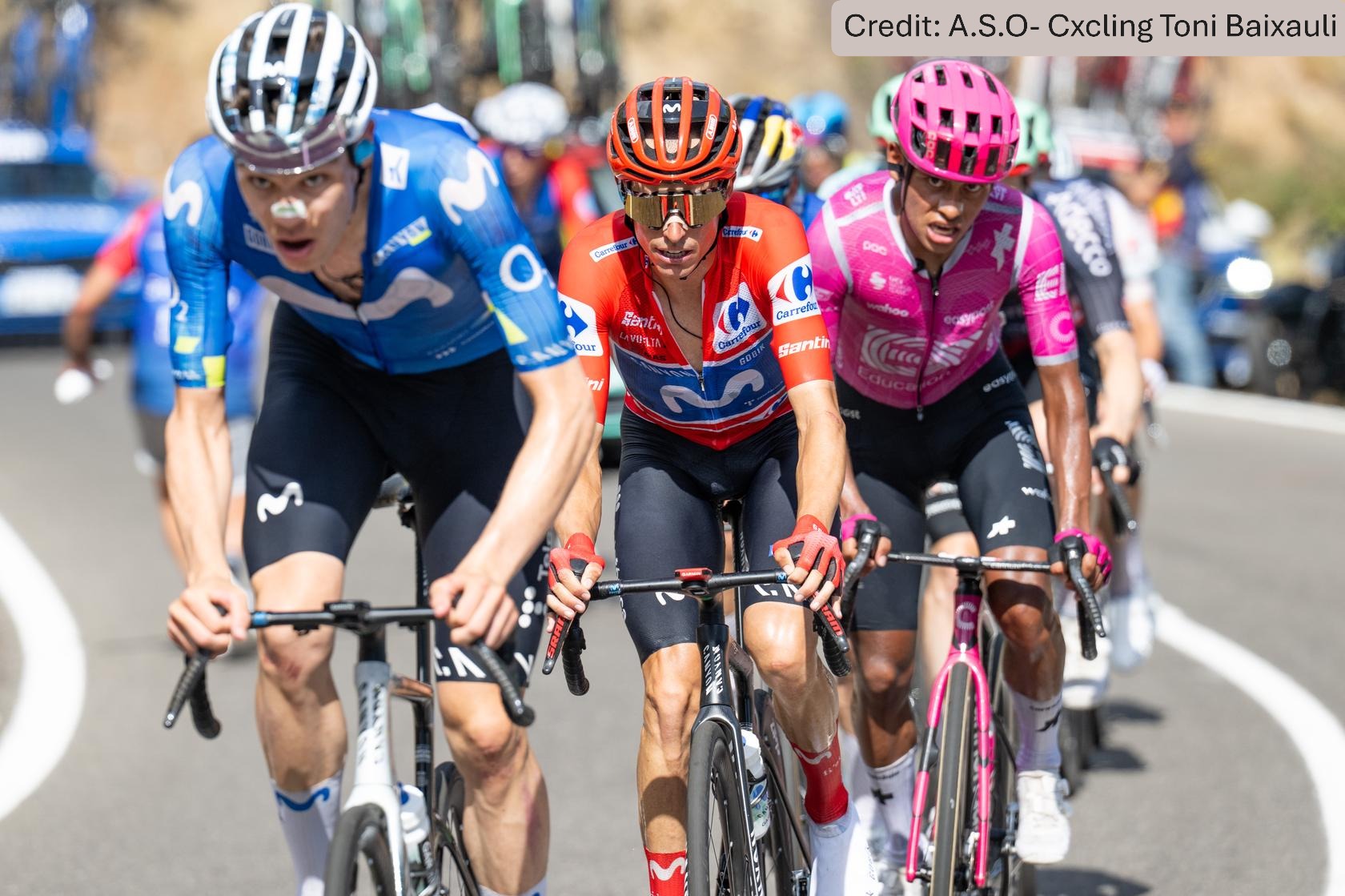
In the peloton at the start of Calar Alto, Movistar had two riders in front of Mas plus García Pierna who was coming back from the break. After about 1 km of climbing, Decathlon CMA CGM took over with three men plus Felix Gall and ramped up the pace and cut the group down to ten riders, not including Mattias Skjelmose of Lidl-Trek, Sepp Kuss of Visma-Lease a Bike, or Harold Tejada of XDS-Astana who were all distanced. It wasn't long before Gall's teammates burned off, leaving the Austrian to strike out in search of time. Mas was quick to respond as was Primož Roglič of Redbull-Bora Hansgrohe as a little chase group formed behind with Onley, Carapaz, and Gall's teammate Gregor Mühlberger. Gall was the only one willing to pull which left him in a tenuous position. Mas took advantage by attacking and there was no reaction from either Gall or Roglič.
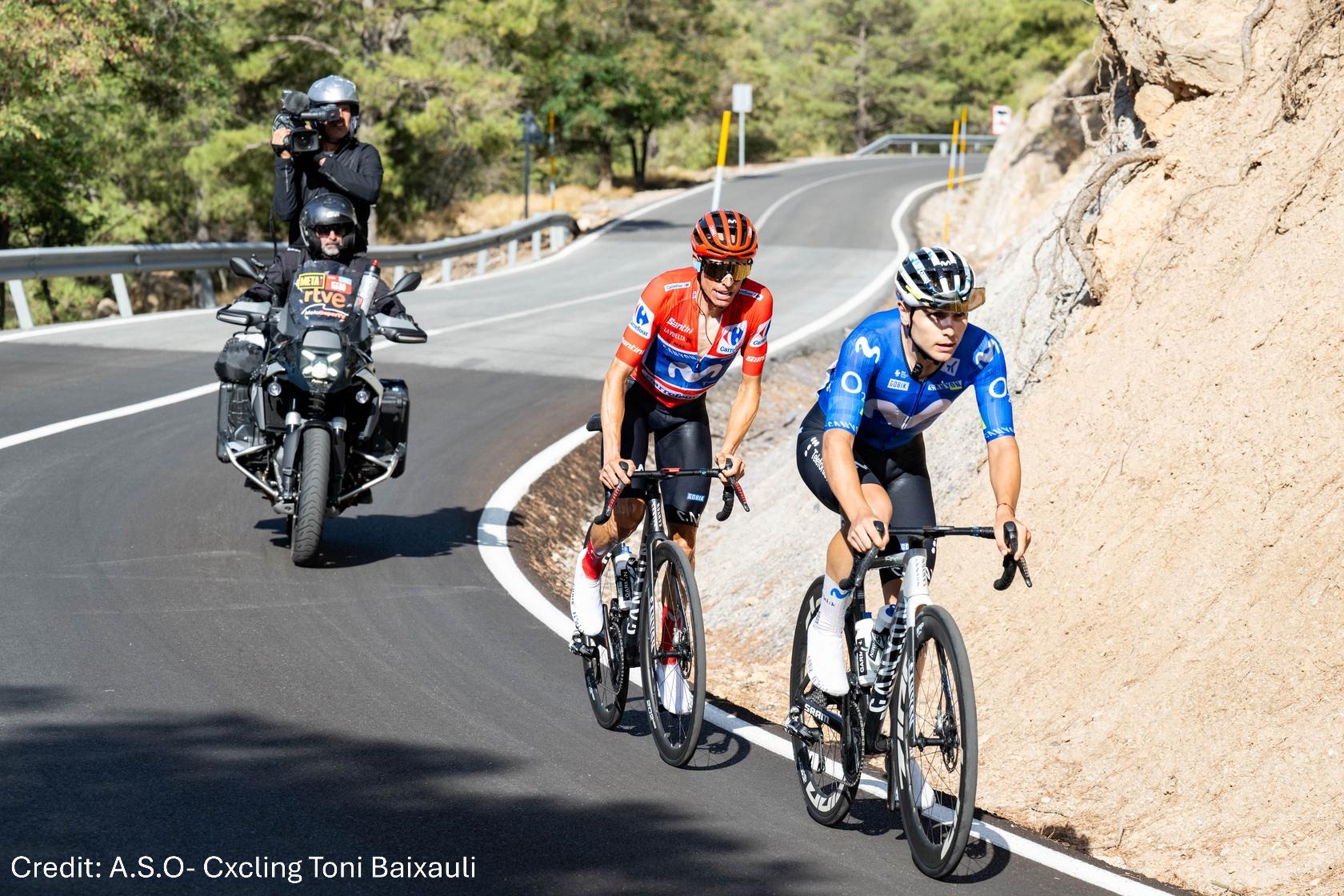
About 10 km from the top, Mas joined up with García Pierna who handed a bottle to his leader and got right to work pulling on the lesser gradients of the second half of the climb. 2 km later, the Gall group caught Tuckwell and Bisiaux from the break and had Carapaz and Mühlberger join from behind to give them more firepower in the chase but they were already 35 seconds down on Mas and had work to do. García Pierna could pull no more and swung off with 6 km to go leaving Mas to fend off Tuckwell, Mühlberger, and Bisiaux who doing all they could to bring Gall and Roglič up to Mas. The group was down to just Gall, Roglič, and Carapaz with 3 km to go but they had not managed to close any time down on Mas. As Mas crossed inside the final kilometer, he picked up Vansevenant from the break and they came in together at 2 minutes 56 seconds on Omrzel and all eyes went to the clock to see when Gall and company would come home. It was 27 seconds as Gall led Roglič and Carapaz across the line to end another day of leaking time to Mas.
A lot happened on the stage and there was some reshuffling in the GC. Mas leads with Roglič still in second and Gall in third but now at 1 minute 45 seconds and 2 minutes 6 seconds respectively. Carapaz jumped over Onley to move into fourth but the big mover of the day was Omrzel who climbed four spots up to sixth at 4 minutes 59 seconds to Mas.